You’ve put money into advanced AI models, hired skilled staff, and launched impressive pilots. Yet, the promised transformation—better efficiency and insight—still feels out of reach. The ROI spreadsheet is not filling itself. Many leaders feel frustrated by this gap. The problem usually isn't the AI's intelligence. It lies in a more basic area—between systems. The real threat to AI value is not how accurate the model is, but the integration debt.
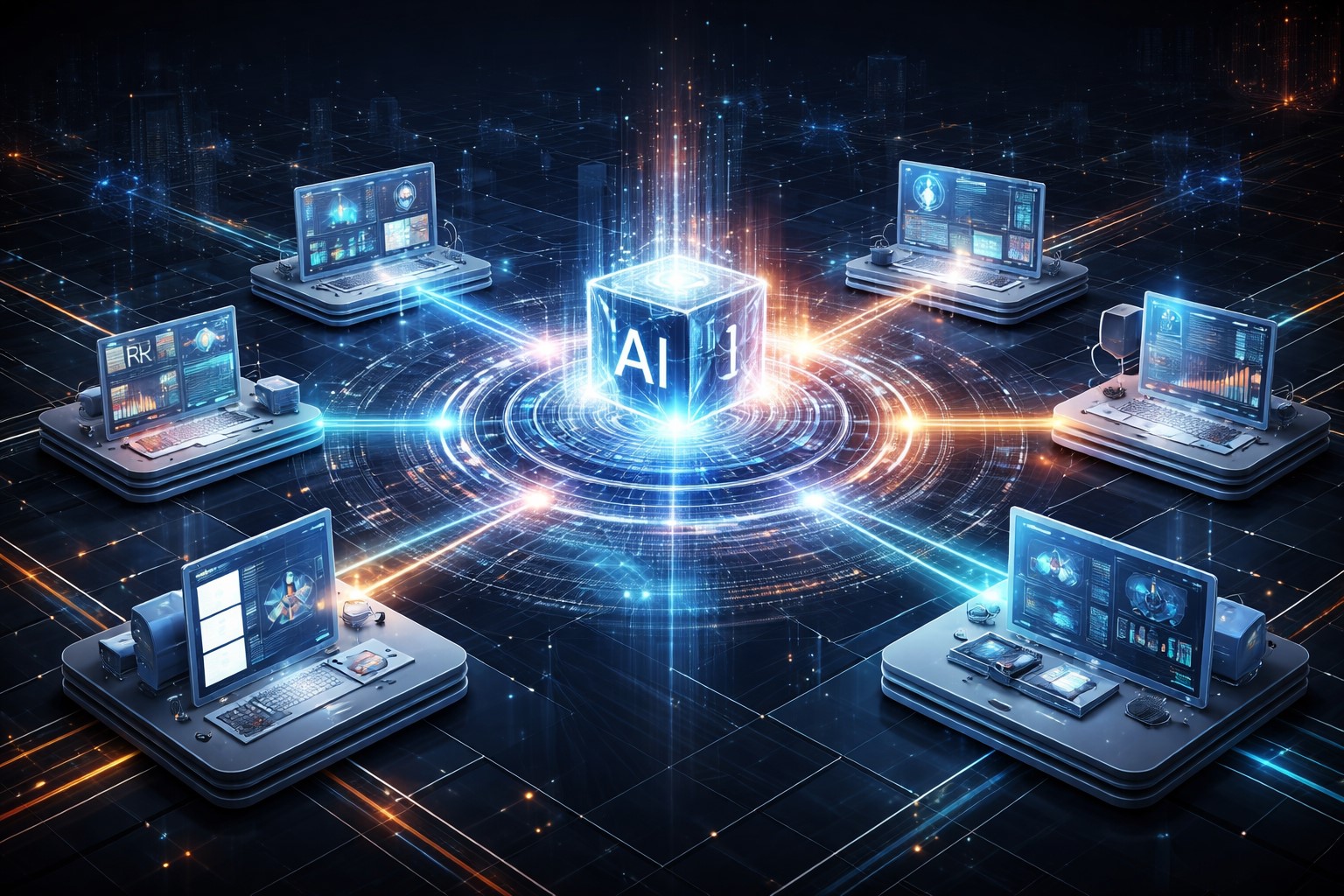
Today's enterprise technology stack is a mix of legacy ERP, modern SaaS clouds, departmental databases, and a variety of powerful AI tools. Each new AI solution, whether a ready-to-use product or a custom model, adds complexity. They become isolated "islands of intelligence." Each one is effective on its own but fails to create a seamless business process. For example, a customer service AI doesn't know about the inventory shortage flagged by the supply chain system. A marketing personalization engine relies on CRM data that is already six hours old. This isn't an issue with AI; it's a failure of structure and strategy. In the rush to adopt AI, we've overlooked the connections that make it functional.
Traditionally, integration has been seen as an IT problem involving APIs and data pipelines. This view is mistaken. With AI involved, integration should be seen as a key business design principle. Every AI project needs to start by asking, "Which other systems does this AI need to communicate with to be useful?" and "What actions does it need to trigger in our operations?" Designing these interactions—the decision rights, data exchanges, and feedback loops—is about rethinking business processes. This design determines if an AI becomes a neat demo or a valuable capability.
Recognizing this issue, a new category of infrastructure is emerging: AI-native orchestration and integration platforms. Think of them as the central nervous system for automated intelligence. These platforms do more than just transfer data. They offer the framework for AI agents to function securely and reliably. They handle authentication across systems, manage the status of ongoing AI workflows, log every decision for audits, and provide safeguards that prevent costly errors. Choosing and managing this orchestration layer is as crucial as selecting the AI models themselves.
You can't integrate what you don't understand. AI integration requires a significant shift in data maturity—from simple collection to real fluency. Fluency means having a clear, real-time understanding of key entities (like customer, product, order) across all systems. It involves breaking down data barriers not just technically but also politically and organizationally. An AI making pricing decisions needs access to cost data (ERP), competitor data (external feeds), and customer sentiment (CRM). If these data exist in separate domains controlled by different budgets, the integration will fail. The battle for AI value is fought in the data governance committee.
To tackle integration debt, leaders must adopt a new approach. First, Audit for Integration Points: Map your top-priority AI use cases by their dependence on other systems, not by how complex their algorithms are. Prioritize those with clear and well-defined integration paths for quick wins. Second, Establish an Integration Council: Form a cross-functional team responsible for setting integration standards. This group should include business process owners, data architects, and security/compliance officers. Third, Invest in the Middleware Strategy: Check if your current integration stack (like ESBs, iPaaS) is ready for AI. It likely needs upgrades with platforms designed for intelligent workflows. Finally, Measure What Matters: Change KPIs from model performance metrics (like accuracy, F1 score) to metrics based on business outcomes enabled by integration (for example, "end-to-end process cycle time" and "cross-sell conversion rate based on real-time inventory").
In the future, integration will evolve from a point-to-point challenge to a semantic one. AI systems will connect not just through APIs but by negotiating shared meanings through knowledge graphs and ontologies. Additionally, as AI agents become more common, we will see the emergence of automated integration agents—AI systems created to dynamically discover, validate, and maintain connections between other AIs and legacy systems. This will lessen the integration workload for human teams. The integrated enterprise will transform into a self-integrating entity.
Your AI models are not failing. They are stifled by an infrastructure that cannot support their full potential. The power of AI is not unlocked at its creation but through its connections—to data, processes, and other intelligences. Leaders who keep funding AI projects without also investing in the integration framework are wasting resources. The real advantage will go to those who design their organizations to support not only artificial intelligence but orchestrated intelligence.
This week, hold a different kind of AI review meeting. Don’t ask about the latest model features. Instead, present one essential AI initiative and demand a complete account: list every system it interacts with, every data source it needs, and every business rule that guides its actions. The gaps in that overview should become your immediate strategic focus. Start building connections before launching the next project.
In today’s fast-evolving tech landscape, businesses strive to accelerate their software delivery cycles without sacrificing quality.
Exploring AI's genuine influence on creativity across art, music, writing, and media, revealing both opportunities and challenges.
Hello, legal eagles! As we soar into middle of 2024, it's impossible to ignore how Artificial Intelligence (AI) is reshaping industries..
What if your organisation’s core processes could not only be automated but also autonomously..